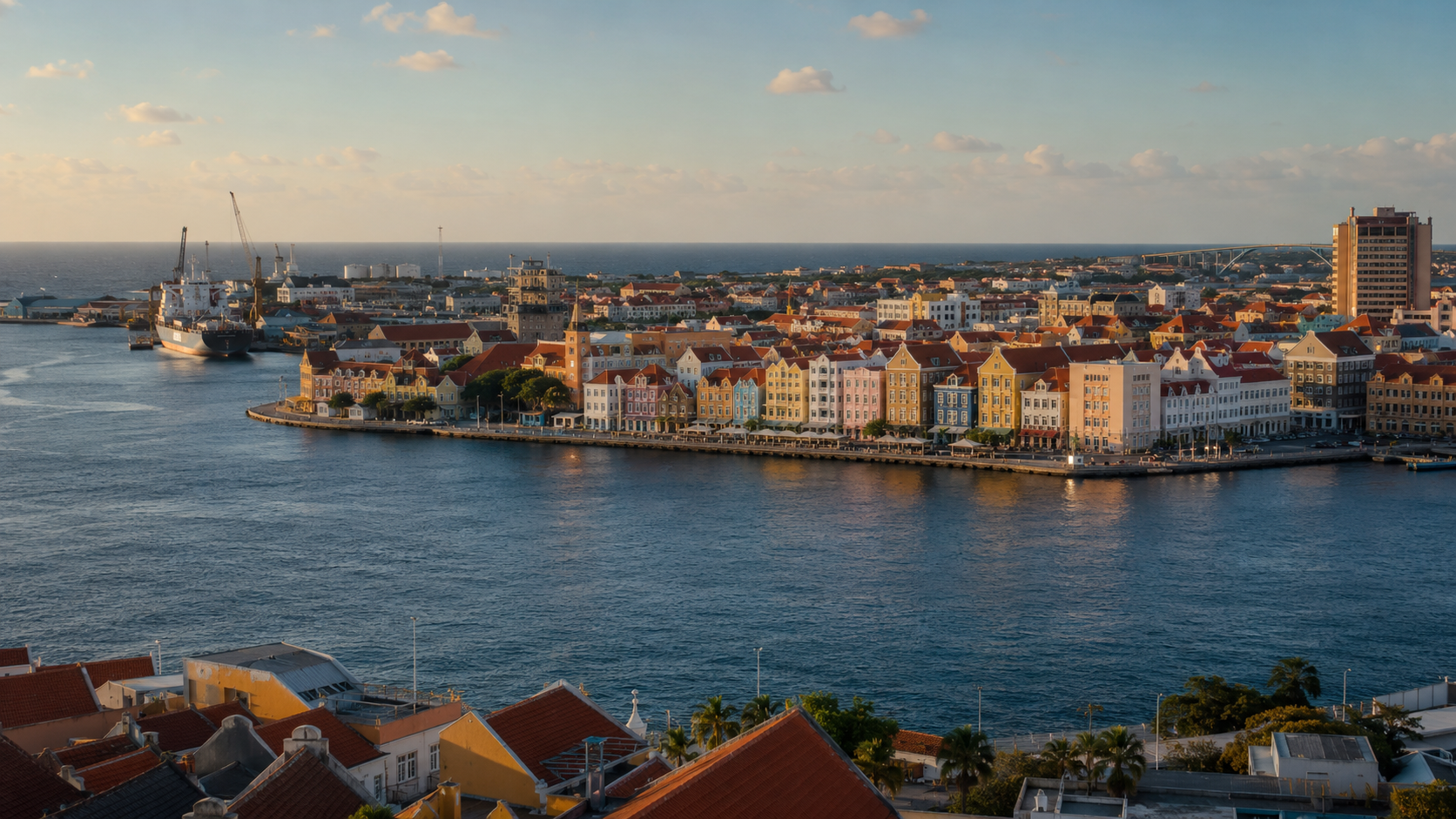
Curaçao combines a flexible Dutch Caribbean corporate framework with established financial infrastructure, multilingual business capabilities and direct commercial connections to Europe, North America and Latin America. The jurisdiction can support international operating companies, regional trading structures, technology businesses, regulated platforms and investment activities, provided that ownership, licensing, taxation, banking and operational substance are aligned from the outset.
Curaçao is an autonomous country within the Kingdom of the Netherlands, with its own government, tax system and corporate legislation. Its legal environment reflects Dutch civil law traditions while remaining adapted to the needs of a Caribbean economy with extensive international commercial activity. The jurisdiction has longstanding experience in financial services, international trade, tourism, logistics, shipping and cross-border corporate administration. Willemstad functions as the island's principal commercial centre, supported by port infrastructure, international air connectivity and a multilingual workforce familiar with Dutch, English, Spanish and Papiamentu. Curaçao is not part of the European Union and does not provide automatic access to the EU Single Market. Its value lies elsewhere - in its position between several major economic regions, its adaptable corporate forms, its regulated service environment and its ability to support businesses with a genuine Caribbean or international operating rationale.
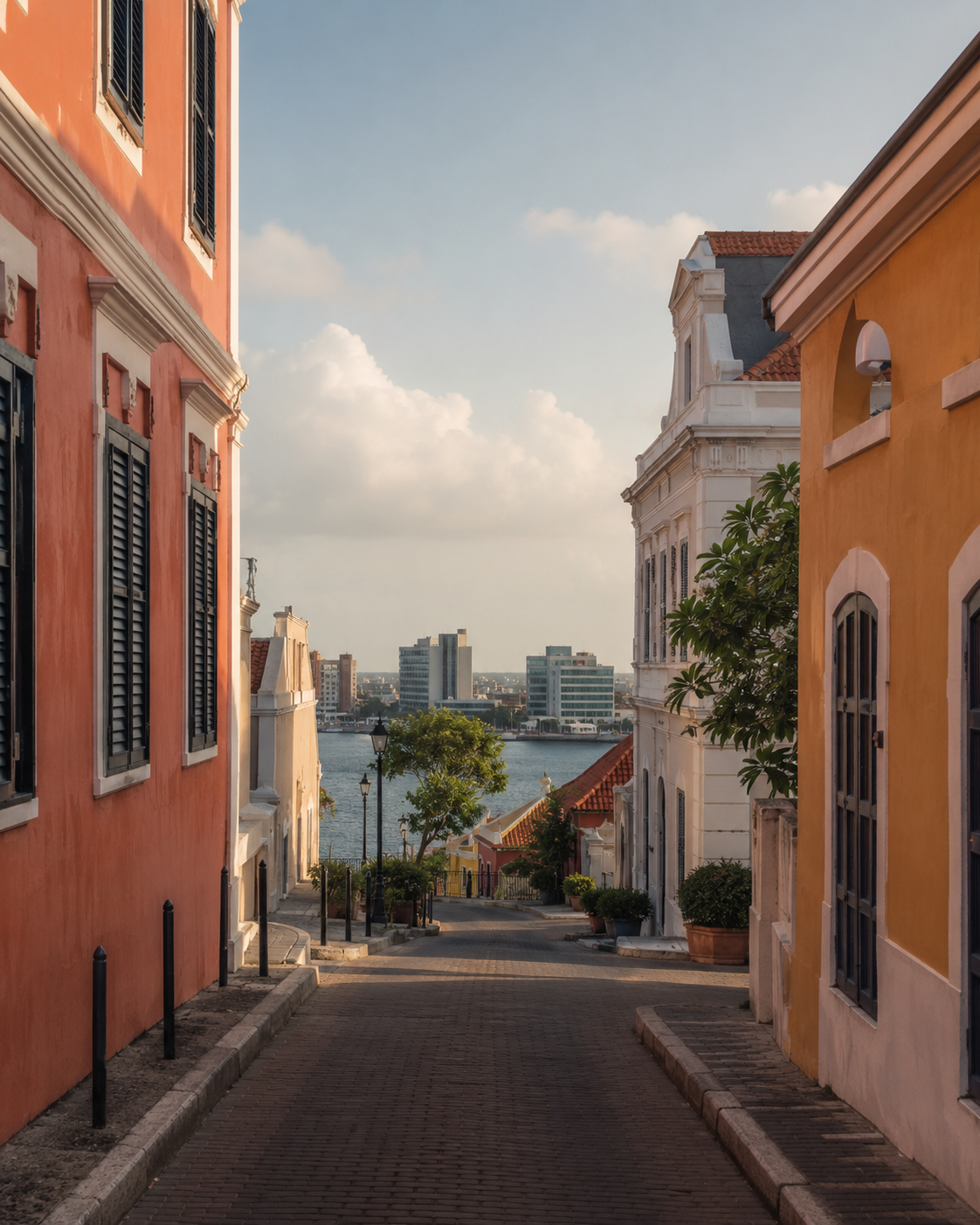
Curaçao can provide a practical platform for companies that require international reach, regional access and a clearly structured operating environment.
The principal limited liability structures are the Besloten Vennootschap, or BV, and the Naamloze Vennootschap, or NV. Both are incorporated through a Curaçao civil law notary and registered in the Commercial Register maintained by the Curaçao Chamber of Commerce and Industry.
The BV is commonly selected for privately owned and internationally controlled businesses. Its articles of association can provide considerable flexibility in relation to share classes, voting rights, profit participation, transfers and management. This makes it suitable for owner-managed companies, subsidiaries, joint ventures and structures involving a limited group of investors.
The NV may be more appropriate for larger enterprises, businesses with a broader shareholder base or structures requiring a more formal corporate framework. The choice between a BV and an NV should be based on governance, investment, financing and regulatory requirements rather than on name recognition alone.
Curaçao law also recognises foundations, private foundations and partnership structures. A Stichting Particulier Fonds, or SPF, may be relevant in certain asset-holding, estate-planning or private wealth arrangements, but it is not a universal replacement for an operating company. Its legal purpose, management and tax treatment require separate analysis.
Foreign companies may also establish a branch in Curaçao. A branch does not create the same legal separation as a locally incorporated subsidiary, because the foreign head office remains responsible for the branch's obligations. This may be appropriate for an integrated regional presence but less suitable where liability separation, local investment or sector-specific licensing is required.
A BV or NV is created through a notarial deed of incorporation containing the articles of association. At least one founder is required, and the founder may be either an individual or a legal entity. Non-residents can establish a Curaçao company through a power of attorney without being physically present for the execution of every incorporation step.
The articles should define the company name, statutory seat, activities, capital structure, share rights, governance and representation rules. International structures may require customised provisions covering reserved matters, transfers, investor protections, multiple share classes or limitations on the authority of individual directors.
Following execution of the deed, the notary registers the company with the Curaçao Chamber of Commerce and Industry. According to the Chamber's official business establishment guidance, a straightforward BV or NV may be incorporated quickly once the required documentation and approvals are in place. The complete operational setup generally takes longer because tax registration, beneficial ownership reporting, business permits, banking and sector-specific licences follow separate procedures.
The company must obtain a CRIB number from the Curaçao Tax Administration. This is the taxpayer identification number used for profit tax, turnover tax, payroll obligations, customs interactions and communication with public authorities. Registration requirements vary according to the company's legal form and activities.
Founders, shareholders, directors and ultimate beneficial owners should expect to provide identification, residential address evidence, corporate documents and information explaining the source of funds and purpose of the structure. Foreign documents may require certification, apostille or translation depending on their country of origin and intended use.
Curaçao companies can be established by foreign individuals or foreign legal entities. The ownership structure must be clearly documented and capable of being reconciled across the notarial deed, shareholder register, Commercial Register, UBO Register, tax records and banking documentation.
A BV or NV is managed by one or more directors in accordance with its articles of association. Directors may be individuals or, where legally and operationally appropriate, corporate entities. Their authority can be individual, joint or subject to specific limitations recorded in the corporate documents and Commercial Register.
The board is responsible for the company's administration, corporate records, financial position and compliance with applicable filing requirements. International founders should decide who will negotiate contracts, approve transactions, manage employees and exercise strategic control. These functions influence banking, tax residence, substance and the credibility of the structure.
Curaçao maintains a central UBO Register administered through the Chamber of Commerce. New legal entities must generally register their ultimate beneficial owners within 14 days of incorporation or establishment. Existing information must be kept accurate and updated when ownership or control changes. The Chamber provides current instructions through its official UBO Registry portal.
UBO analysis should identify the natural persons who ultimately own or control the structure, including control exercised through intermediate companies, voting arrangements or other means. Where no individual satisfies the primary ownership criteria, the applicable rules may require identification based on senior management or other control principles.
Legal entities carrying on business in Curaçao are generally subject to profit tax. The Curaçao Tax Administration currently states that the general rate is 15 percent on the first XCG 500,000 of taxable profit and 22 percent on the excess.
Curaçao applies a territorial approach to business profits. Under this framework, results connected with activities performed in Curaçao or assets linked to Curaçao are included in the local profit tax base. A company with both domestic and foreign results must determine and substantiate how income and expenses are connected to each activity.
Territoriality should not be interpreted as an automatic exemption for income invoiced to foreign customers. The Tax Administration examines where the relevant activities are performed, where costs arise, which assets are used and whether the income comes from a material business operation. Passive income, including certain interest, royalties, rent and dividend income, is generally treated differently and may remain within the Curaçao tax base.
The official profit tax guidance requires taxpayers to submit a provisional return within three months after the end of the financial year and a final return within six months, subject to the applicable rules and any approved extension. Companies must calculate and pay the tax due through the digital tax system.
Curaçao also applies turnover tax, or omzetbelasting, rather than a conventional input-credit VAT system. The general rate is 6 percent, with specific 7 percent and 9 percent rates applying to certain goods and services. Because the tax can apply cumulatively at different stages of the commercial chain, contract pricing and transaction flows should be analysed carefully.
The current rates, exemptions and filing principles are described by the Curaçao Tax Administration in its official turnover tax guidance. Cross-border services, foreign suppliers, accommodation, insurance and real estate transactions may require specific treatment.
Preferential regimes, rulings and special classifications should be reviewed against current legislation. Historic descriptions of Curaçao as a jurisdiction offering a general offshore rate should not be applied to a new structure without confirming that the relevant regime remains available and that the company satisfies its legal and substance requirements.
Curaçao has an established banking and financial services sector supervised by the Centrale Bank van Curaçao en Sint Maarten, or CBCS. The local currency is the Caribbean guilder, identified as XCG or Cg, which is maintained within a fixed exchange-rate framework against the US dollar.
A Curaçao company may seek an account with a local bank, an international financial institution or a suitable payment provider. Incorporation does not guarantee account approval. Each institution applies its own customer acceptance policy, jurisdictional restrictions and assessment of the company's industry, ownership, counterparties and transaction flows.
Common onboarding documents include the articles of association, a recent Chamber of Commerce extract, shareholder register, identification of directors and beneficial owners, bank references, business plan, source-of-funds evidence and information about expected payments. The Chamber's business and investment guidance also identifies the establishment permit and relevant board resolutions among the documents that may be requested.
Companies with international activities should prepare a clear explanation of where customers are located, how services are delivered, why Curaçao was selected and which functions are performed on the island. Banks may apply enhanced due diligence to gaming, virtual assets, financial services, payment processing, high-risk markets or structures with several ownership layers.
Foreign exchange rules and reporting requirements may apply to transactions between residents and non-residents, foreign bank accounts, intercompany balances and trade credit. These requirements should be reviewed before implementing treasury, financing or cross-border settlement arrangements.
Company incorporation and permission to conduct business are separate processes. A legal entity intending to establish a business in Curaçao generally requires a vestigingsvergunning, or establishment permit, from the relevant government authority.
The official Curaçao government establishment permit guidance states that a separate director's permit has not been required since 15 August 2023. This change does not remove immigration, work authorisation or sector-specific licensing obligations.
Additional permissions may be required for hospitality, construction, transport, telecommunications, healthcare, import and export activity, environmental operations and other regulated sectors. The legal assessment should cover the actual services, customer types, transaction flows, marketing and operational arrangements rather than relying only on the activity stated in the articles of association.
Financial institutions, insurers, investment businesses, trust service providers, securities intermediaries, asset managers and money transfer companies fall within the supervisory framework of the CBCS. Virtual asset service providers, payment service providers and electronic money institutions are also subject to registration or regulatory requirements when offering services in or from Curaçao. The CBCS publishes its current supervisory sectors and application requirements through its supervision portal.
Gaming businesses are regulated by the Curaçao Gaming Authority. The current framework distinguishes between B2C licences for offering games of chance and B2B licences for providing services to licensed operators. A corporate registration or establishment permit does not replace a gaming licence, and a general licence certificate does not by itself authorise every player-facing domain or operational activity.
Regulated companies may require approved policy-makers, compliance personnel, internal controls, technical systems, financial resources, local presence and ongoing regulatory reporting. Licensing feasibility should therefore be assessed before incorporation terms, technology arrangements and customer contracts are finalised.
Curaçao should not be treated as a registration-only jurisdiction. Tax authorities, regulators and financial institutions increasingly expect the company to demonstrate how its presence relates to its commercial activity.
Relevant substance can include directors with appropriate knowledge and authority, management conducted from Curaçao, local employees or service providers, office facilities, accounting records, contracts, infrastructure and documented decision-making. The required level depends on the company's industry, revenue, regulatory status and role within the wider group.
A digital services company may require a different operating presence from a licensed gaming supplier, regional trading business or investment manager. Substance should therefore be proportional rather than cosmetic.
Territorial profit taxation makes the location of activities and costs particularly important. A company seeking to distinguish foreign business results from Curaçao-connected profit must maintain evidence showing where people, assets, risks and value-creating functions are located. Foreign income should not be classified only by the address of the customer or the bank account receiving payment.
International groups must also assess tax residence, permanent establishment, transfer pricing and controlled foreign company rules in the jurisdictions of shareholders, directors and related companies. A Curaçao company managed entirely from another country may create tax exposure outside Curaçao even when it remains validly incorporated on the island.
Intercompany services, loans, intellectual property arrangements and cost allocations should be supported by written agreements and commercially defensible pricing. Corporate records should show that decisions were taken by the persons authorised to make them.
Curaçao offers a multilingual workforce with experience in tourism, international services, finance, technology, logistics, administration and regulated industries. Local recruitment can contribute to operational substance and create a stronger connection between the company and its stated commercial purpose.
Employers must register for payroll taxes and social contributions, maintain employment records and comply with local labour standards. The employment model should account for salaries, benefits, leave, working hours, termination rules and mandatory contributions.
Foreign ownership of a company does not automatically grant the right to live or work in Curaçao. A foreign employee who requires authorisation must generally obtain both a work permit and an appropriate residence status.
The government guidance for a foreign employee work permit explains that employers may need to register the vacancy in advance and demonstrate efforts to identify suitable candidates in Curaçao. Requirements and exemptions depend on nationality, residence status, role and the circumstances of the employment.
Founders and directors relocating to Curaçao should coordinate immigration, corporate appointment and employment planning before beginning operational work. A registered directorship is not a substitute for residence or work authorisation.
Remote and internationally distributed teams also require analysis. Employees working from other countries may create foreign payroll, employment law, tax residence or permanent establishment obligations for the Curaçao company.
A Curaçao company must maintain accurate books and records reflecting its financial position and commercial activity. The accounting system should distinguish revenue, expenses, assets and liabilities connected with Curaçao from foreign operations where territorial tax treatment is relevant.
Annual financial statements should be prepared in accordance with the applicable legal and accounting framework. The level of external review or audit depends on the company's size, legal classification, activities and regulatory status. Licensed businesses may be subject to more extensive financial reporting and audit obligations.
Ongoing compliance commonly includes profit tax returns, turnover tax filings, payroll reporting, payment of social contributions, renewal of Chamber registration, maintenance of the shareholder register and updating company information following changes in ownership, directors, address or representation.
The UBO Register must remain consistent with the company's ownership and control. Banks, regulators and service providers may request updated extracts, financial statements, proof of tax compliance and evidence that the business remains active.
Regulated companies face additional obligations such as compliance reporting, internal control reviews, policy updates, transaction monitoring, incident reporting and regulatory fees. Annual administration should therefore be planned as part of the operating budget rather than treated as a basic registered-office renewal.
Curaçao may be relevant for regional trading companies, tourism and hospitality groups, shipping and logistics operations, digital service providers, software and gaming suppliers, payment and financial technology businesses, professional service firms and companies connecting Europe with Caribbean and Latin American markets.
Its multilingual environment can support customer service, regional administration and cross-border commercial teams. The island's port, airport and telecommunications infrastructure also provide a foundation for businesses with physical or digital links to the wider region.
Regulated sectors can benefit from an established supervisory environment, but licensing, governance and compliance costs must be assessed realistically. Curaçao is not automatically suitable for every gaming, fintech or virtual asset project simply because the relevant regulatory categories exist.
The jurisdiction is strongest where there is a genuine reason to operate from Curaçao, identifiable management and a business model compatible with available banking, licensing and workforce capabilities.
For structures aimed only at obtaining a foreign company with minimal activity, other jurisdictions may provide a more proportionate solution. The decision should follow the operating model, not precede it.
CFA Intelligence approaches Curaçao as part of a wider international business architecture. The process begins with understanding the intended activities, customer markets, ownership structure, management location, payment flows and regulatory exposure.
Support may include selecting the appropriate legal form, coordinating incorporation through local professionals, structuring ownership and governance, organising corporate and UBO documentation, and identifying establishment permit, tax and accounting requirements.
For regulated businesses, CFA Intelligence can help evaluate the applicable licensing pathway, operational substance, compliance framework and interaction with the Curaçao Gaming Authority, CBCS or other relevant authorities.
Banking preparation can include reviewing the ownership profile, business model, source of funds, expected transactions and supporting documentation before approaching financial institutions or payment providers. Approval remains subject to the institution's independent compliance review and risk policy.
Ongoing support may cover corporate administration, regulatory coordination, accounting arrangements, banking documentation and adjustments to the structure as the company expands into new markets or activities.
Additional perspectives on international structuring,banking, compliance and regulatory developments.